Watch it build a course. Then watch someone prove they learned it.
Ten steps, in order, with the product running in every one. This is a demo manufacturer and its own product documents. Nothing on this page is a mockup.
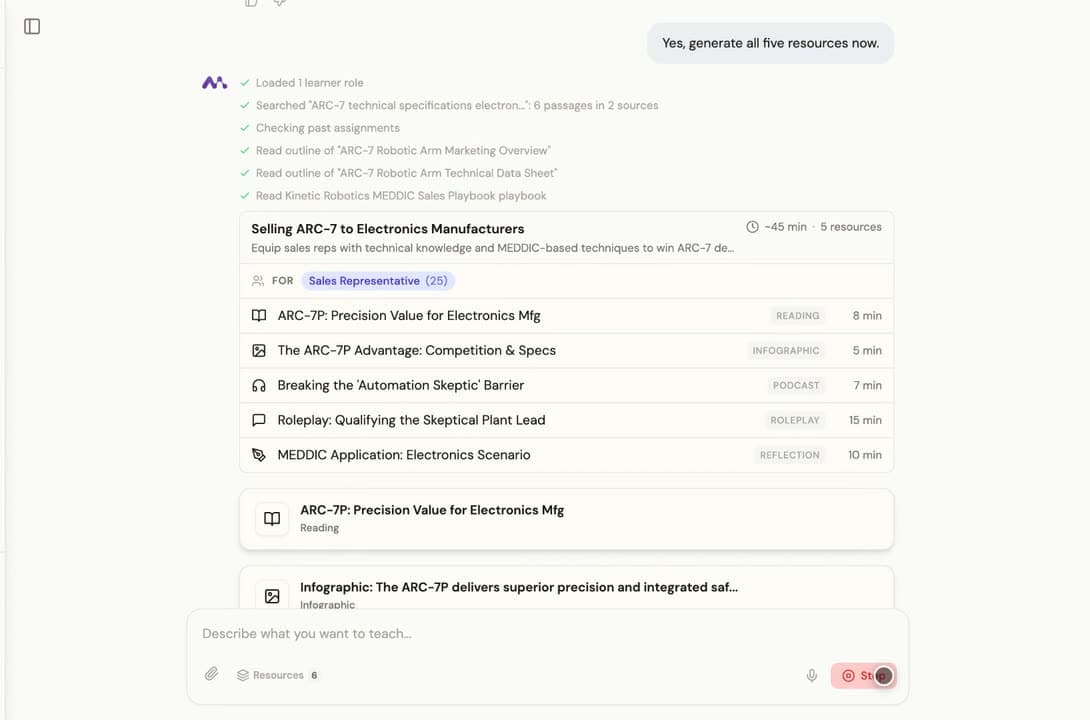
Build the course.
One person who owns the training. No instructional designer, no authoring tool, and no starting from a blank page.
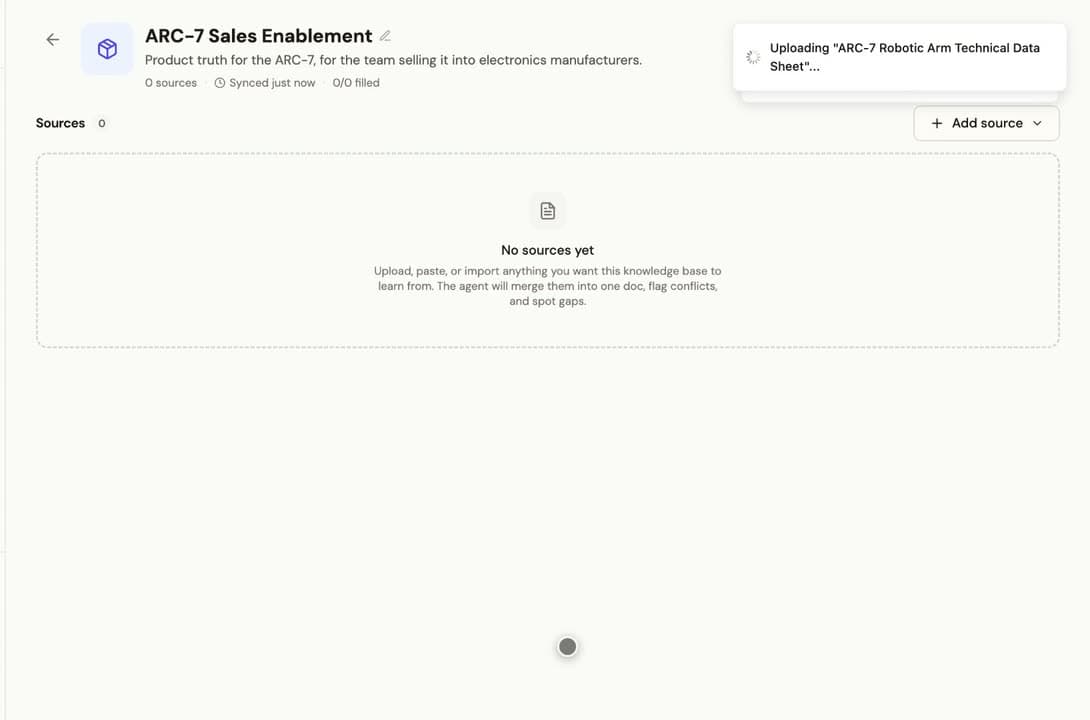
Add the documents you already have.
Product sheets, decks, process docs, spreadsheets. Drop them in or connect Google Drive or OneDrive. Everything gets read and indexed, and from this point on every lesson has to come from them.
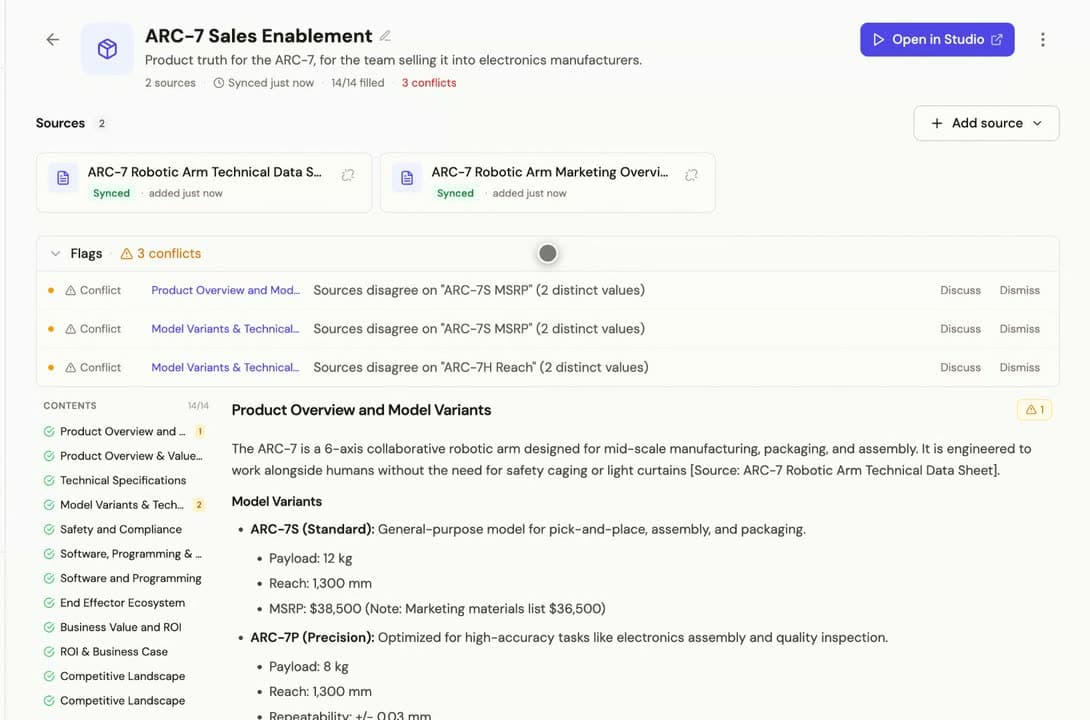
It tells you where your own documents disagree.
Two files went in. Three contradictions came out. The technical data sheet prices the ARC-7S at $38,500 and the marketing overview says $36,500, and neither team knew.
You find that out here, on this screen, instead of finding out when a rep quotes the wrong number to a customer. Every line it writes carries the source it came from.
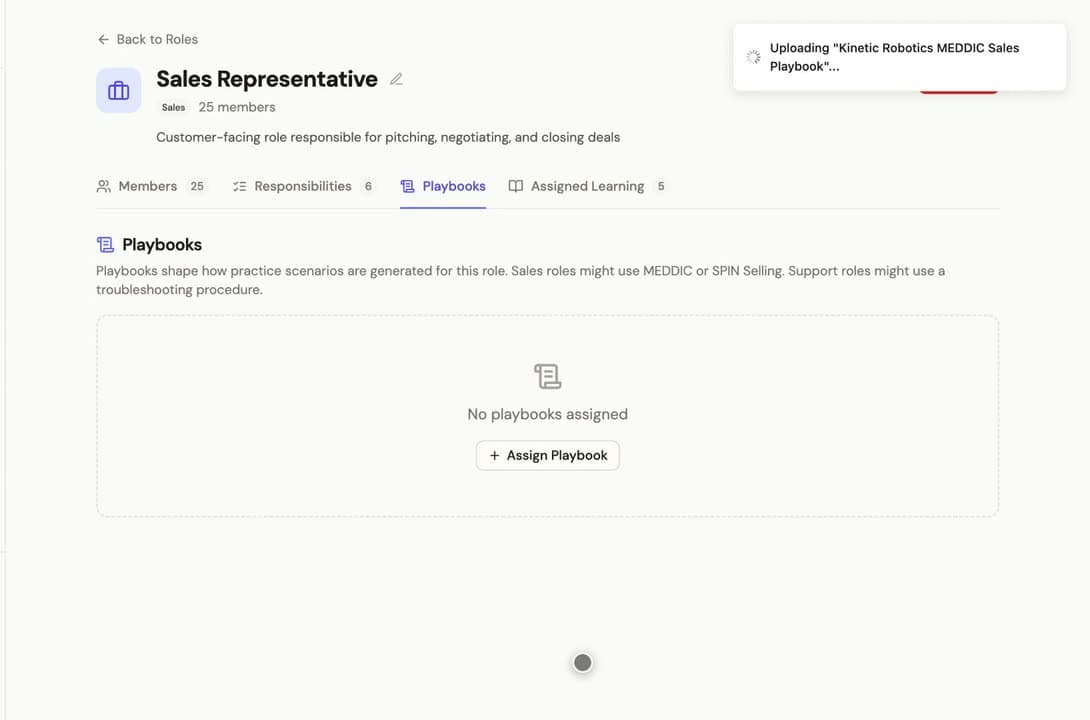
Add the way your team actually sells.
Upload your playbook and attach it to a job role. This one is MEDDIC. Pick from seven common methodologies or bring your own.
From here, everything built for that role is shaped by it. The practice calls, the grading rubric, the worked examples. Your method, not a generic one.
Ask for the course you want.
Type it the way you would explain it to a colleague. It asks what it still needs to know, proposes a course outline with a time estimate on every lesson, and waits for you to say go.
- Reads your sources and your playbook before it plans
- Shows every step it took to get there
- Rewrites any lesson you push back on

Publish to a role, not to a list of names.
Twenty five sales reps get it at once. Anyone who joins that role next month gets it automatically, without a person remembering to assign it.
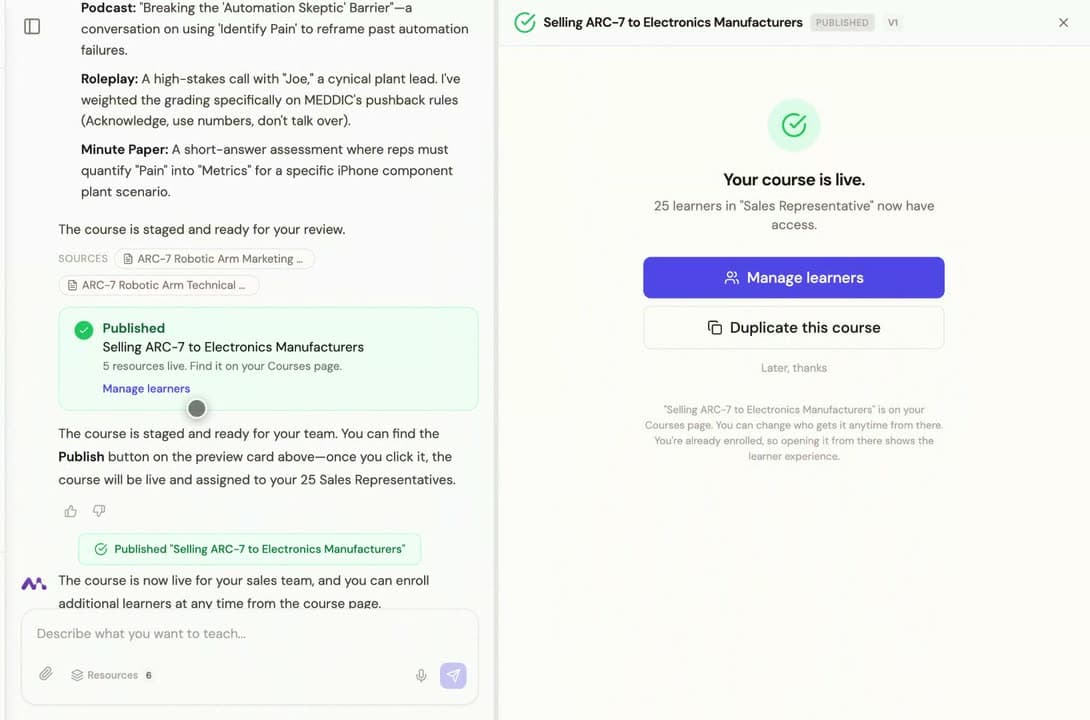
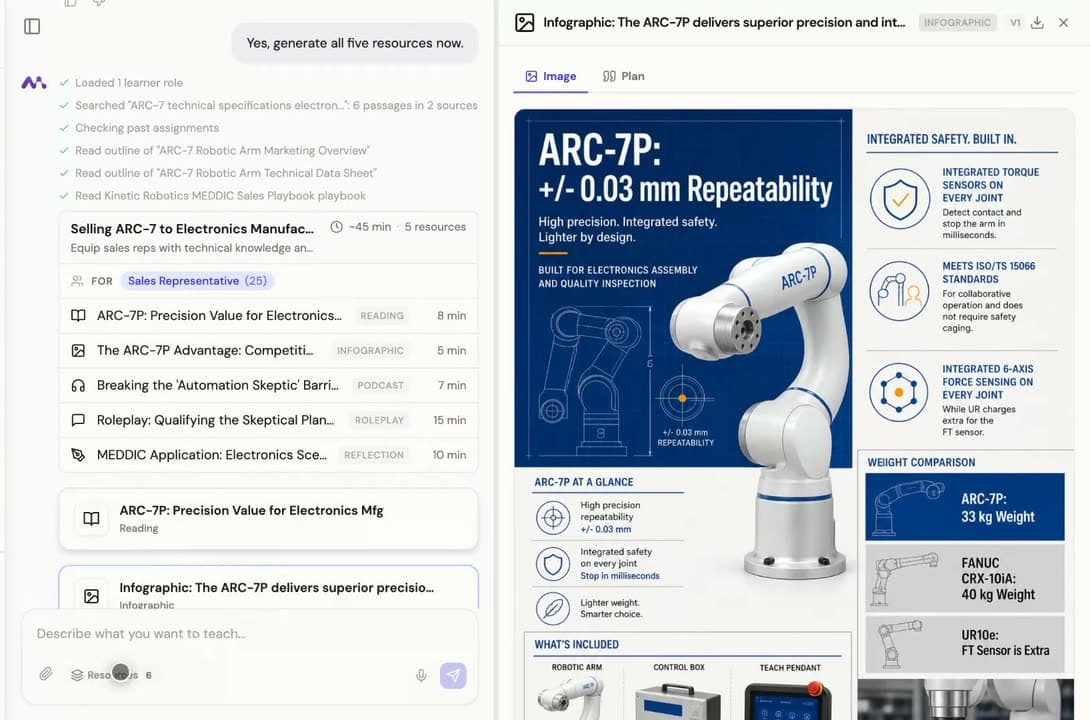
One set of sources. Five kinds of lesson.
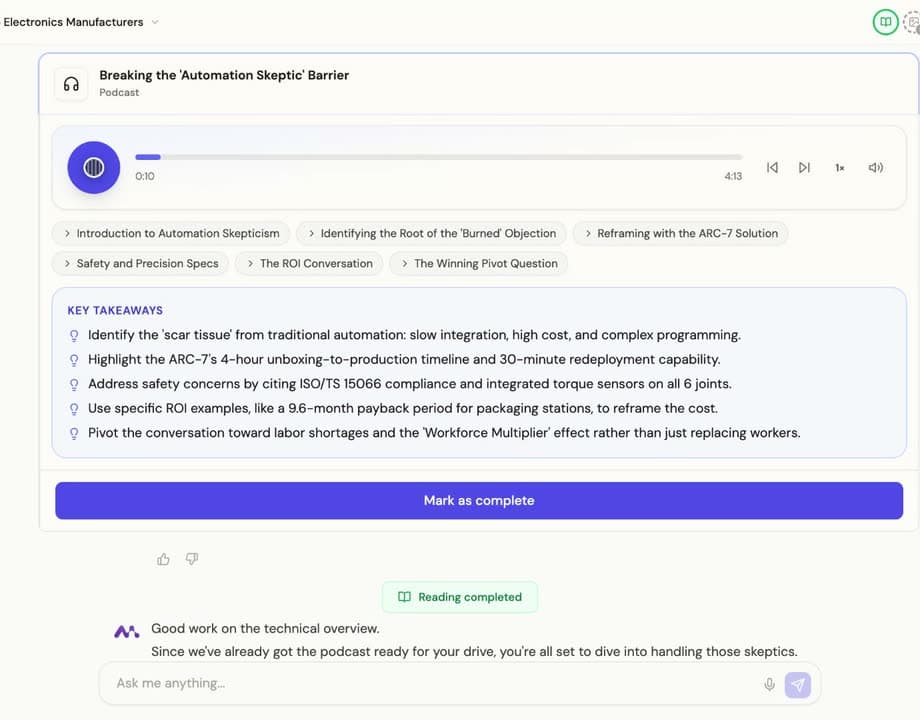
The same two documents became a reading, an infographic, a podcast, a practice call and a written checkpoint. Nobody has to sit through a format that does not suit the work.
Prove they can do it.
One of those twenty five reps signs in and opens the course that was just published to her. She has a Mentor with her the whole way, and she does not get through it by clicking Next.
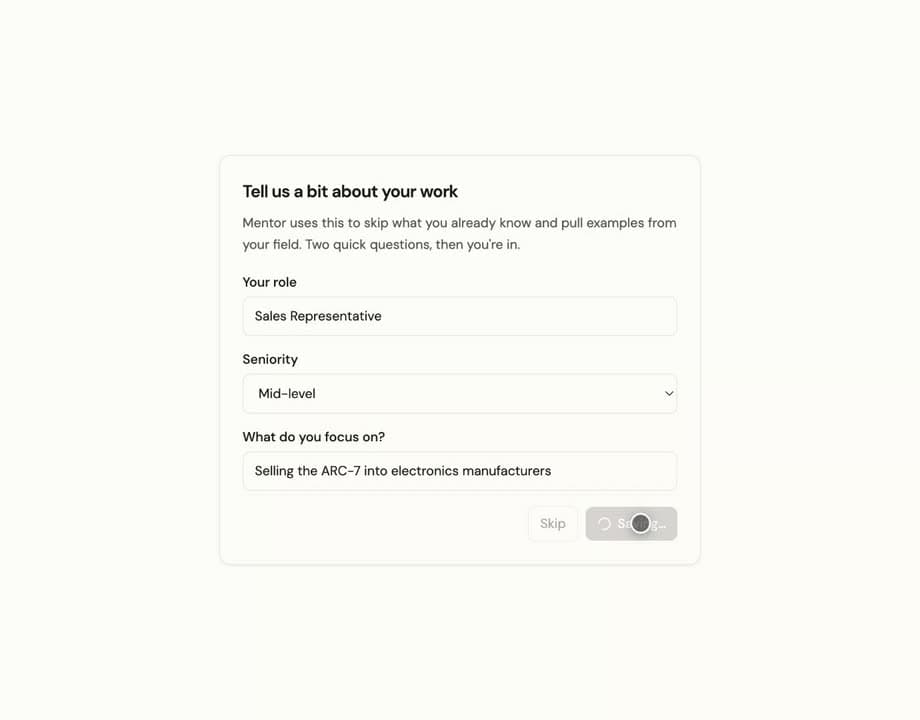
It asks two questions, then drops a lesson she does not need.
First sign in asks her job and what she is working on. That is the whole intake.
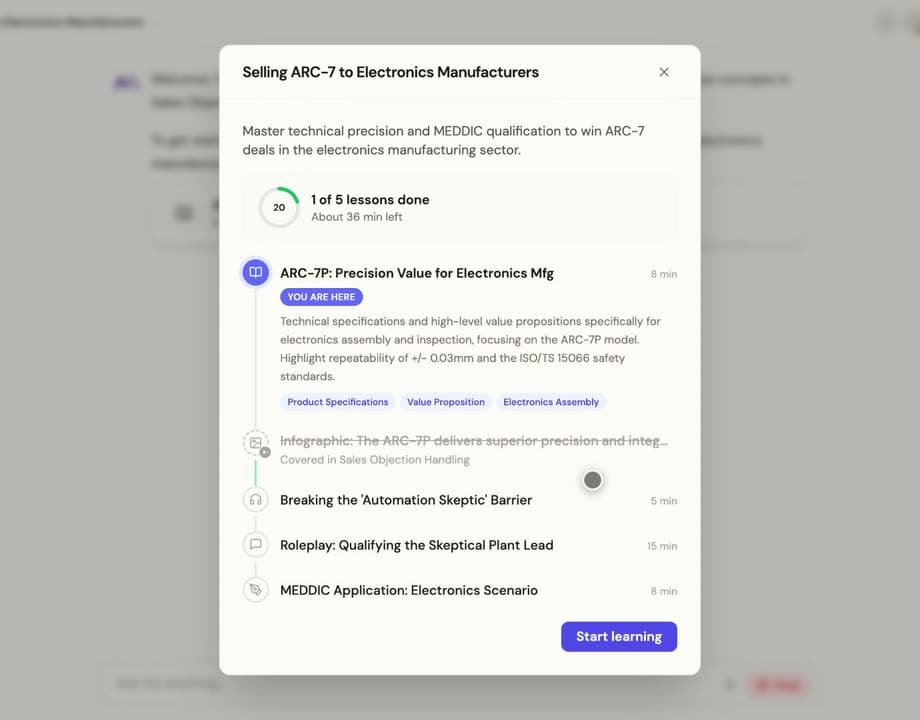
By the time the course opens, one of the five lessons is already struck out: "Covered in Sales Objection Handling". She proved those concepts in a different course last month, so this one starts at four lessons and thirty six minutes instead of five and forty one. Nobody sits through something they have already been marked on, and it is still there if she wants it.
Every lesson comes with a Mentor. Ask it anything.
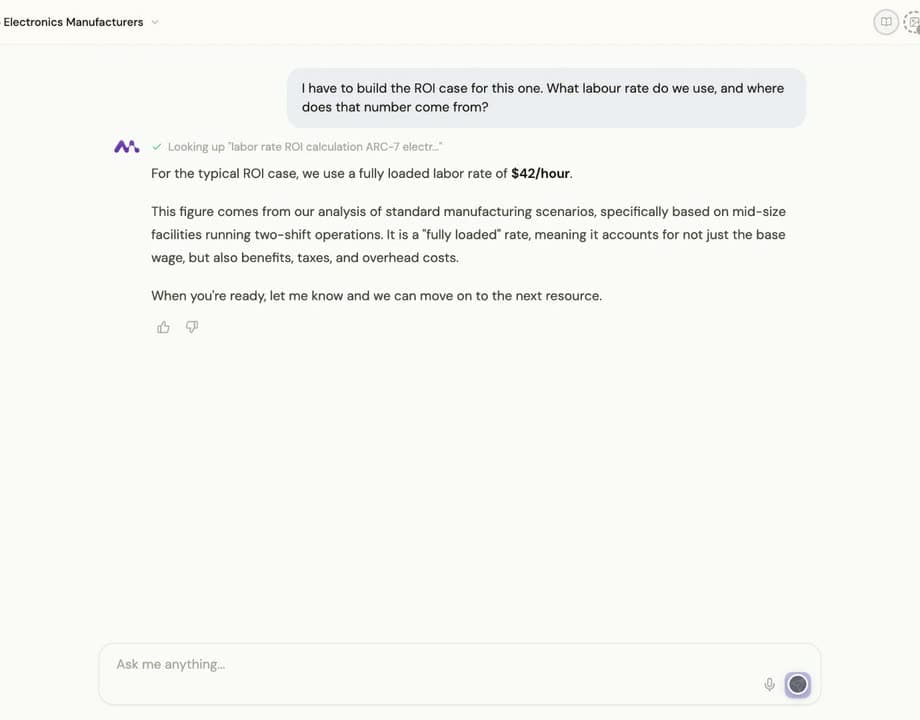
She has an ROI case to build, so mid lesson she asks what labour rate to use and where that number comes from. It answers with $42 an hour, says the figure is fully loaded rather than base wage, and says which of the company's own documents it came out of.
She also has a drive tomorrow, so she asks to take the podcast next. It reorders the course and says it will come back to the reading when she is out of the car.
The lesson does not restart, and nothing she asks is held against her. Questions are never graded.
Practice out loud, before it counts.
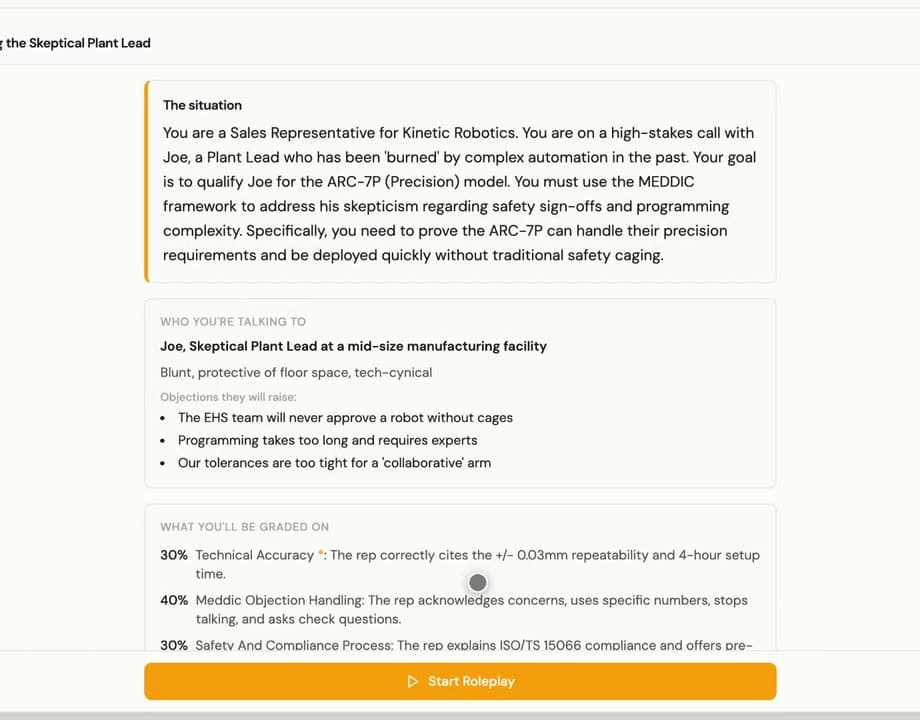
She sees who she is about to talk to, the three objections he is going to raise, and exactly what she is graded on, with the weights.
Then she talks. Out loud, in a real voice conversation, and it answers back in character.
Miss it. See exactly what to fix. Pass it.
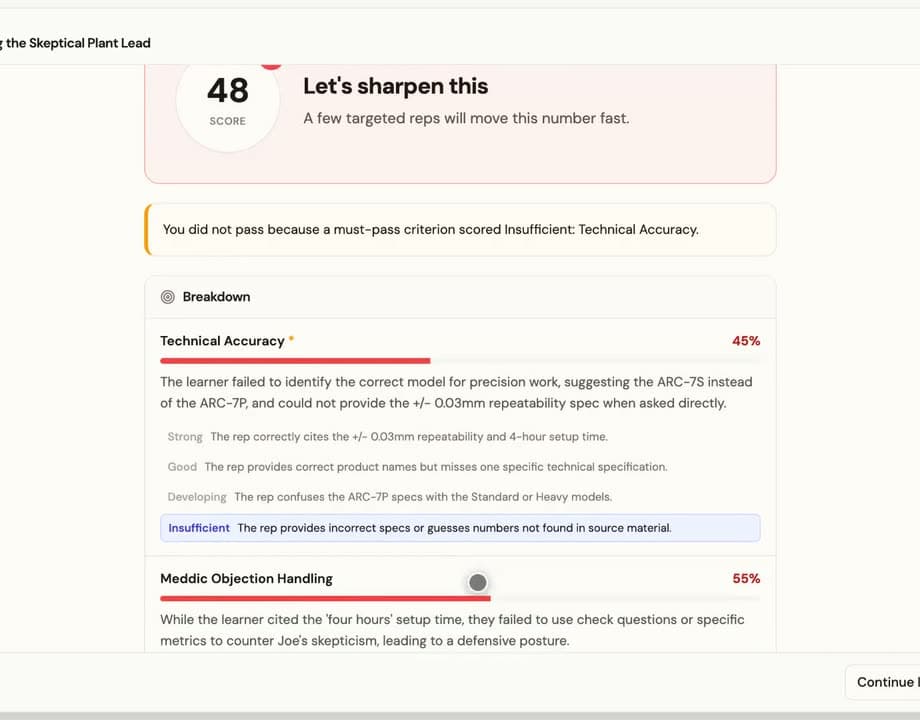
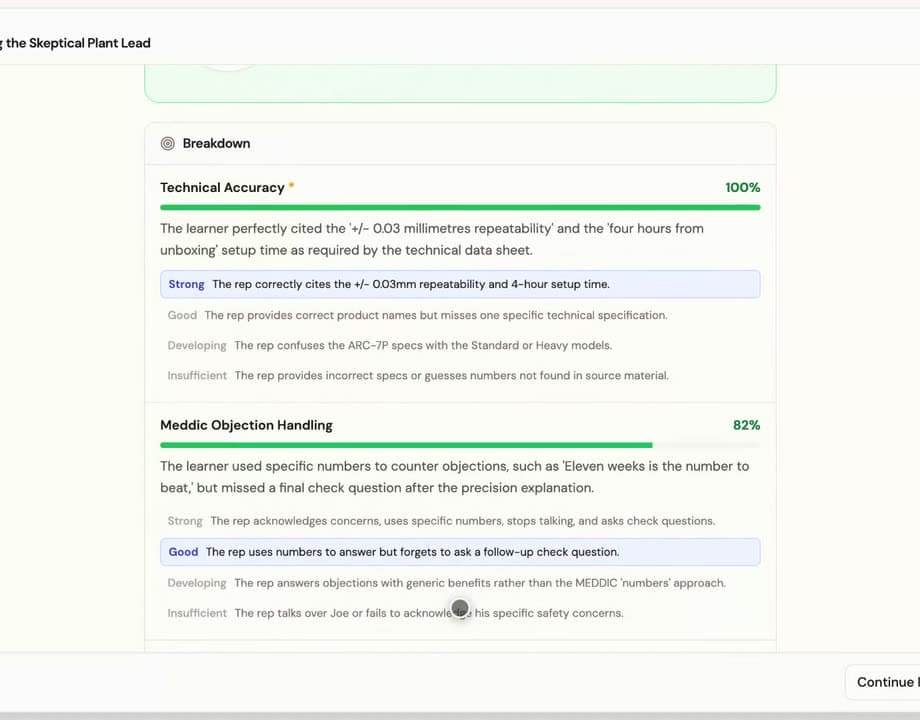
First attempt scores 48, and it does not fail her on a vibe. Technical accuracy comes back at 45 percent with the reason written out: she recommended the ARC-7S when the job needed the ARC-7P, and when Joe asked her directly for the repeatability spec she could not produce it.
Second attempt, same rubric, same grader. That same line comes back at 100 percent, because this time she cited the figure and the setup time the way the data sheet has them. Objection handling moves 55 to 82.
The improvement lands in the exact place the first attempt was marked down, which is the difference between a score and something worth doing twice.
Finish on real answers, not multiple choice.
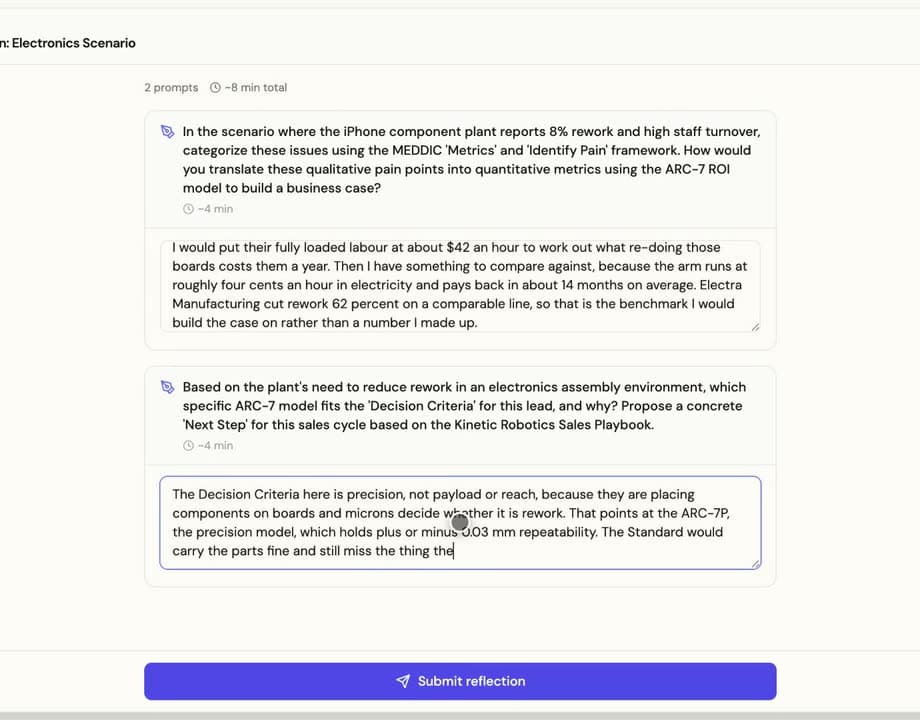
The course ends on a written checkpoint, two prompts and no options to pick from. She has to turn a plant's rework rate and staff turnover into metrics a CFO would act on, then name the model that fits and the next step in the deal. It is graded against a rubric built from the same documents the course came from: 90 for accuracy of ideas, 83 for completeness, 90 for clarity, and a note that the turnover figure never made it into her final business case.

Then it closes the course out by name, tells her what she did well, and wishes her luck for the call tomorrow. Five lessons, one of them skipped because she had already proved it, thirty six minutes.

Something to show when someone asks if the team is ready.
A course that stays true
Built from your documents and tied back to them, so when a source changes you know what the change touches.
A score with the reasoning attached
Sub-scores per rubric line, next to the learner's actual words. Not a completion percentage.
The gaps, named
Who is confident and wrong, which lesson people keep failing, and who is not ready to take calls yet.
Four that come up every time.
How long does the first course really take?
The run above is about fifteen minutes of work, and most of that is the wait while five lessons generate. The part a person actually does, adding sources, attaching the playbook, describing the course, is closer to five.
Does it invent things?
Lessons are written from the documents you upload and cite them line by line. When two of your own documents disagree, it stops and flags the collision rather than picking a winner, which is the third step above. Rubrics come from those same documents, so grading is judged against your material.
Do we have to build it ourselves?
Only if you want to. Send us what you already train on and we build the first course with you on a call, so you see it work on your own material instead of learning a tool first.
Can we see this on our own documents?
Yes, and it is the fastest way to judge it. Book a walkthrough and bring one document you already train people on.
Run it on your own documents.
Bring one document you already train people on and watch the same ten steps happen to it. Fifteen days free, up to 25 people, no card.
